
WELCOME BONUS 300%
UP TO €2000 + 100
FREE SPINS
UP TO €2000 + 100
FREE SPINS
Home → Roulette
Roulette at LiliBet Casino
Error: 10 Percent Contribution to Wagering Missed
Tischspiele contribute only 10% toward the wagering requirement for the 300% welcome bonus up to €2,000 plus 100 free spins. This low contribution rate means high rollers must deposit significantly more capital to clear the bonus funds compared to players using slots. The restricted progress directly impacts the total turnover needed before any withdrawal is permitted by the casino operators.
The effective wagering multiplier increases substantially because only a fraction of each bet counts toward the target. A player betting €100 on roulette adds merely €10 to the required turnover sum. This mathematical disadvantage forces serious players to balance their bankroll carefully between table games and other eligible products.
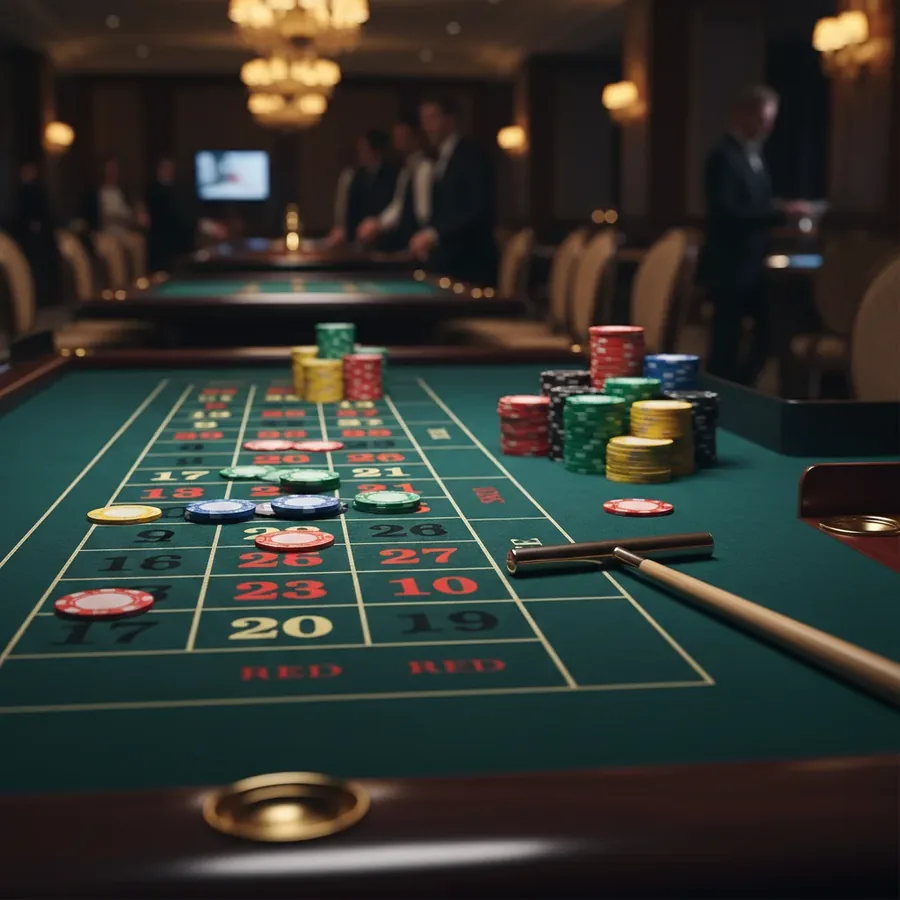
La Partage Applies Only to Even Chances
Roulette Französisch mit La Partage offers an RTP of 98.65% and a house edge of just 1.35% on even chance bets like Rot/Schwarz. When the ball lands on zero, the operator refunds fifty percent of the stake on these specific wagers instead of losing the entire amount. This rule significantly reduces volatility for high rollers placing large sums on red or black during extended sessions.
Losing Streaks: 10 Times Red Is Normal
Statistical probability dictates that long streaks of single-color outcomes occur regularly in European roulette with its 37 sectors and 2.70% house edge. High rollers often face sequences where red appears ten consecutive times, testing the limits of their bankroll management strategies. Understanding this variance helps players avoid chasing losses when the wheel does not follow short-term expectations.
2.70 vs 5.26 Percent House Edge
Roulette Amerikanisch carries a steep house edge of 5.26% due to the double zero creating 38 sectors on the wheel. In contrast, Roulette Europäisch maintains a much lower 2.70% advantage for the house across its 37 sectors. This significant difference drastically affects the long-term profitability for high rollers who place substantial bets on straight numbers or splits.
When is it Worth Switching to French Roulette?
Switching to French roulette becomes mathematically advantageous when seeking the lowest possible house edge of 1.35% through La Partage rules. Live tables like Ultimate Roulette from Ezugi allow bets up to 5,000 EUR but lack this specific refund mechanism for even chances. Players should compare the 2.70% edge of standard European wheels against the reduced risk offered by specialized French variants.
Roulette bet types at a glance
| Bet | Payout | Win Chance | Numbers Covered | House Edge |
|---|---|---|---|---|
| Roulette Französisch mit La Partage (gerade Chancen) | Rot/Schwarz 1:1 (bei 0 Rückerstattung 50%), Odd/Even 1:1, Low/High 1:1; Innere Einsätze ohne La Partage: Straight 35:1, Split 17:1, Street 11:1, Corner 8:1 | 98.65% | Bei 0 wird die Hälfte des Einsatzes auf gerade Chancen zurückerstattet (Rot/Schwarz, Pair/Impair, Manque/Passe). En Prison gibt denselben 1,35%. Regel gilt NUR für gleiche Einsätze | 1.35% |
| Roulette Amerikanisch (doppelte Null, 38 Sektoren) | Straight 35:1, Split 17:1, Street 11:1, Corner 8:1, Six Line 5:1, Dozen 2:1, Column 2:1, Rot/Schwarz 1:1 | 94.74% | 38 Sektoren (1–36 + 0 + 00); Auszahlungen wie beim europäischen Rad, aber der zusätzliche Sektor verdoppelt den Hausvorteil | 5.26% |
| Roulette Europäisch (einfache Null, 37 Sektoren) | Straight 35:1, Split 17:1, Street 11:1, Corner 8:1, Six Line 5:1, Dozen 2:1, Column 2:1, Rot/Schwarz 1:1, Odd/Even 1:1, 1-18/19-36 1:1 | 97.30% | 37 Sektoren (1–36 + 0); Auszahlungen wie für 36 Sektoren – daher konstanter Edge auf ALLE Wetten | 2.70% |
| Roulette Französisch, innere Einsätze (La Partage gilt nicht) | Straight 35:1, Split 17:1, Street 11:1, Corner 8:1, Six Line 5:1, Dozen 2:1, Column 2:1 | 97.30% | Rad gleich (37 Sektoren), aber La Partage/En Prison gilt nicht für innere Einsätze – Edge bleibt europäisch | 2.70% |
| Roulette Amerikanisch – Five Number Bet (0, 00, 1, 2, 3) | Five Number 6:1 (deckt 5 von 38 Sektoren) | 92.11% | Einzige Wette am amerikanischen Rad mit Edge über 5,26% – „Fallenwette“. Kein Äquivalent am europäischen Rad | 7.89% |
Mistake: Choosing American Wheel with 5.26 Percent
The American Roulette wheel features a double zero, creating 38 sectors and a house edge of 5.26 percent. This rate is nearly double the 2.70 percent edge found on the European variant, which contains only a single zero among 37 sectors. High rollers risking significant capital must avoid this elevated cost, as it accelerates bankroll depletion during extended play sessions.
A specific trap exists within the American layout known as the Five Number Bet, covering sectors 0, 00, 1, 2, and 3. This wager carries a staggering 7.89 percent house edge, making it the most unfavorable option available on any casino floor. No equivalent bet exists on the European or French wheels, allowing sophisticated players to bypass this mathematical error entirely.
Payout structures for standard bets like Straight (35:1) remain identical across variants, yet the extra zero alters the underlying probability. The additional sector effectively doubles the house advantage compared to the European version without changing the reward ratio. Consequently, the long-term expected loss increases significantly for every unit wagered on this specific wheel configuration.
How Payout Odds 35:1 Are Achieved
Straight bets on individual numbers consistently pay out at odds of 35:1 across all roulette variants analyzed. This fixed multiplier applies whether the player selects a number on the European wheel with 37 sectors or the American wheel with 38 sectors. The payout structure remains static regardless of the varying house edges associated with each game type.
The mathematical discrepancy between true odds and payout odds generates the casino's profit margin over time. On the European wheel, winning a straight bet occurs once in 37 spins, while the payout covers only 36 units. This one-unit difference per cycle establishes the consistent 2.70 percent house edge for all internal wagers.
Live tables such as Auto Roulette Classic 1 and Ultimate Roulette adhere to these standard payout ratios for direct number selections. Quantum Roulette by Playtech also maintains the 35:1 payout for straight bets despite introducing multipliers for other outcomes. Players should verify that side bets or special features do not alter these core table rules before placing high-value chips.
100 Euro Bankroll: 100 Rounds Simple Chances
Starting with a 100 euro bankroll allows for approximately 100 rounds when betting on simple chances like Red or Black. Each spin risks a small portion of the total funds, providing extended playtime compared to volatile inside bets. Table games contribute only 10 percent toward bonus wagering requirements, limiting the efficiency of this strategy for clearing promotional funds.
On the European wheel, the probability of winning a simple chance bet is slightly below 48.6 percent due to the single zero. A losing streak can rapidly erode the initial 100 euro stake if the player fails to adjust bet sizes or set strict limits. The 2.70 percent house edge ensures that the bankroll will eventually decline over a large sample of 100 or more spins.
French Roulette with La Partage offers a safer alternative by refunding half the stake on even-money bets when zero appears. This rule reduces the house edge to 1.35 percent, effectively doubling the longevity of the 100 euro bankroll against variance. Players utilizing this variant can withstand more losing rounds before reaching the break-even point of their session.
La Partage Halves Loss on Zero
The La Partage rule applies exclusively to even-money bets such as Red/Black, Odd/Even, and Low/High on French tables. When the ball lands on zero, the casino returns 50 percent of the wager instead of confiscating the entire amount. This mechanism directly lowers the house edge from 2.70 percent to 1.35 percent for these specific wagers.
This benefit does not extend to inner bets like Straights or Corners, which retain the standard 2.70 percent house edge. The rule is absent in European Roulette variants where the full stake is lost upon a zero outcome. High rollers must ensure they are playing on French tables to access this reduced volatility for their large stakes.
En Prison offers a similar mathematical advantage but operates differently by freezing the bet for the next round instead of immediate refund. Both rules yield an identical 1.35 percent house edge for even-money bets, providing comparable protection against variance. The absence of La Partage on inner bets means strategic diversification into outside wagers is essential for bankroll preservation.
36 Instead of 37: The Math Behind 35:1
The 35:1 payout on a straight bet reflects the 36 losing numbers out of 37 total sectors on the European wheel. Since the ball can land on any number from 1 to 36 plus the single zero, the true odds against winning are 36 to 1. The casino pays 35 to 1, retaining the one-unit difference as its statistical advantage.
This calculation holds true for all standard bets, including Split (17:1), Street (11:1), and Corner (8:1) wagers. Each payout ratio is derived by multiplying the number of covered losing sectors by two and subtracting one. The consistency of these formulas ensures predictable variance profiles for professional players managing high-limit stakes.
American Roulette complicates this math by adding a second zero, increasing the total sectors to 38 while keeping payouts unchanged. The straight bet still pays 35:1, but the true odds against winning are now 37 to 1. This widening gap between true odds and payout odds explains the higher 5.26 percent house edge on the American variant.
Multipliers up to 500x Lower the Base Payout
Ezugi Ultimate Roulette features Quantum Multipliers reaching 500x, which significantly alter standard payout structures for high rollers. These multipliers apply to specific numbers before the spin resolves, potentially increasing returns beyond the base Straight 35:1 ratio. This mechanic introduces higher volatility compared to standard European roulette with a fixed 2.70% house edge. Players must adjust their bankroll management strategies to account for these volatile swings in potential winnings.
Latency and Betting Window in Live Stream
Authentic Gaming Auto Roulette Classic 1 operates on a strict schedule with automatic wheel spins every sixty seconds. The betting window closes precisely when the croupier announces no more bets, leaving zero margin for error. High rollers placing large stakes must ensure network stability to avoid missing this tight deadline. A failed connection results in lost wagers regardless of the intended amount, emphasizing the need for reliable infrastructure during live sessions.
Dozen 2:1 and Columns Overview
Dozen and Column bets pay 2:1 on the European wheel covering twelve numbers each with a 2.70% house edge. These outside bets offer lower risk than inside options like Split or Corner but provide smaller returns per unit wagered. High rollers often use them to hedge larger straight-up bets against variance during long playing sessions. The consistent payout structure allows for predictable profit calculations based on the total volume of chips placed on these sections.
Check Table Limit Before First Progression Starts
Ultimate Roulette at Ezugi allows bets up to 5,000 EUR per round, accommodating high roller progression strategies effectively. Auto Roulette Classic 1 caps at 2,000 EUR, which may restrict aggressive martingale systems requiring larger stake increases. Players must verify the specific table limit before initiating any betting sequence to prevent rejected transactions. Exceeding the maximum stake results in immediate voiding of the bet, causing significant financial disruption to planned strategies.
Martingale Fails at Table Limit After 8 Losses
A standard Martingale strategy doubling after each loss reaches the 2,000 EUR limit of Auto Roulette Classic 1 after eight consecutive defeats. Starting with a small base stake, the required eighth bet exceeds the maximum allowed by the game provider. This structural barrier prevents recovery of previous losses, leading to substantial net negative outcomes for the player. High rollers should recognize that table limits fundamentally break traditional progression systems regardless of initial bankroll size.
Contact
Live - online chat
Banking









Providers












LiliBet Casino 2026